
How to Lose 20 Pounds in a Month
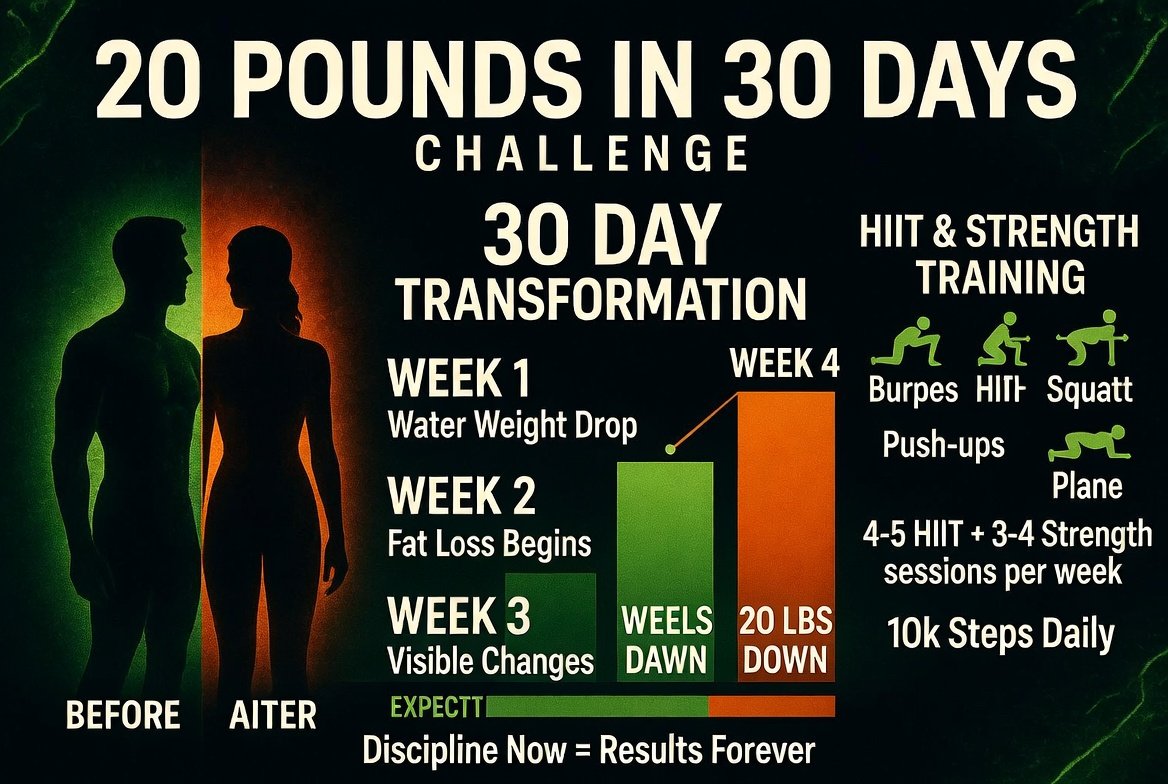
Losing 20 pounds in one month is a highly ambitious goal that requires a strict, well-structured plan. While rapid weight loss is possible—especially for beginners or those with higher body fat—it must be done carefully to avoid muscle loss, fatigue, and health risks. This guide provides a detailed, SEO-optimized strategy to help you lose weight fast while staying as healthy as possible.
Can You Really Lose 20 Pounds in a Month?
Yes, but it depends on factors like:
- Starting weight
- Metabolism
- Diet discipline
- Activity level
Most experts recommend losing 1–2 pounds per week, but in the first few weeks, your body may drop more weight due to water loss and reduced calorie intake.
Step 1: Create a Powerful Calorie Deficit
To lose 20 pounds, you must burn significantly more calories than you consume.
How to do it:
- Reduce your daily intake by 800–1200 calories
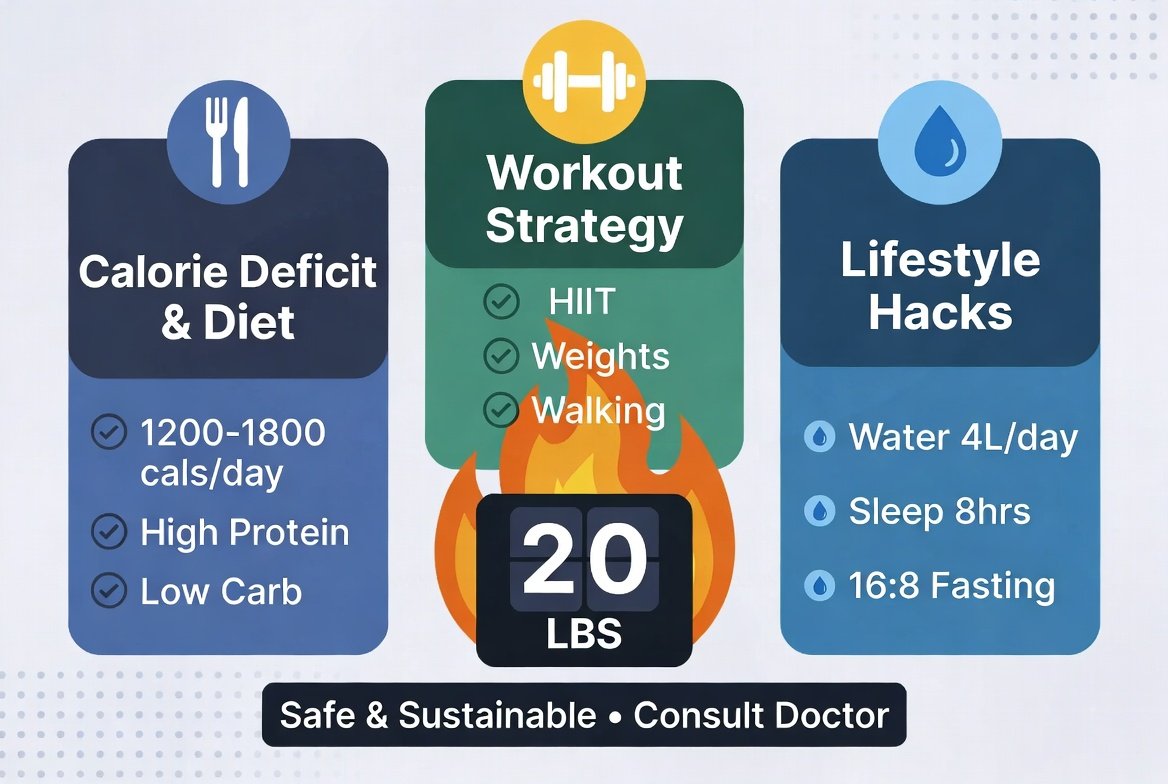
- Eat 1200–1800 calories/day (depending on your body size)
- Use a calorie tracking app for accuracy
Best low-calorie foods:
- Leafy greens (spinach, lettuce)
- Cucumbers, tomatoes
- Lean proteins
- Fruits like apples and berries
Step 2: Follow a High-Protein, Fat-Loss Diet
Protein is the most important nutrient for rapid weight loss.
Benefits:
- Reduces hunger
- Preserves muscle mass
- Boosts metabolism
Ideal protein sources:
- Chicken breast
- Eggs
- Fish (salmon, tuna)
- Greek yogurt
- Lentils and chickpeas
👉 Aim for 0.8–1 gram of protein per pound of body weight
Step 3: Reduce Carbs & Eliminate Sugar
Cutting carbs helps you lose water weight quickly and reduces fat storage.
Avoid:
- Sugary drinks
- White bread and pasta
- Junk food and fast food
Replace with:
- Whole grains (in moderation)
- Vegetables
- Healthy fats (avocado, nuts)
Step 4: Add High-Intensity Workouts (HIIT + Strength)
Exercise accelerates fat loss and improves body composition.
Weekly workout plan:
- HIIT workouts – 4–5 times/week (20–30 minutes)
- Strength training – 3–4 times/week
- Daily walking – 8,000–12,000 steps
Why this works:
- HIIT burns more calories in less time
- Strength training builds muscle and increases metabolism
Step 5: Increase Daily Activity (NEAT)
Non-exercise activity thermogenesis (NEAT) includes daily movements like walking, standing, and chores.
Simple ways to boost it:
- Take stairs instead of elevators
- Walk after meals
- Stand more during the day
Small movements can burn 300–500 extra calories daily.
Step 6: Hydration Strategy
Drinking enough water is crucial for fast fat loss.
Guidelines:
- Drink 3–4 liters of water daily
- Drink water before meals to reduce appetite
- Replace soda and juices with water or green tea
Step 7: Optimize Sleep & Stress Levels
Poor sleep and high stress can block weight loss.
Tips:
- Sleep 7–9 hours per night
- Avoid screens before bed
- Practice relaxation techniques
High stress increases cortisol, which promotes fat storage—especially around the belly.
Step 8: Try Intermittent Fasting (Optional)
Intermittent fasting can speed up fat loss by reducing calorie intake.
Popular method:
- 16:8 fasting (16 hours fasting, 8-hour eating window)
This helps control hunger and improves fat burning.
Step 9: Avoid Common Mistakes
❌ Skipping meals excessively
❌ Starving yourself
❌ Relying on diet pills or supplements
❌ Ignoring protein intake
❌ Not tracking calories
Sample Daily Diet Plan
Breakfast:
- Boiled eggs + green tea
Lunch:
- Grilled chicken + salad
Snack:
- Apple or yogurt
Dinner:
- Fish + steamed vegetables
How Much Weight Will Be Fat?
Out of 20 pounds:
- 8–12 pounds may be actual fat
- Remaining may be water weight and glycogen
Is It Safe?
Rapid weight loss is not ideal for everyone. You should:
- Consult a healthcare professional if needed
- Stop if you feel weak or unwell
- Focus on long-term sustainability
Final Thoughts
Losing 20 pounds in a month requires intense dedication, strict dieting, and consistent workouts. While fast results are possible, the key is to do it in a balanced way that protects your health. Even if you lose slightly less, building strong habits will help you maintain your results long-term.
