
A healthy soft food diet is designed to provide all the nutrients your body needs while being easy to chew and digest. It’s perfect for people recovering from illness, surgery, dental issues, or anyone who finds hard foods difficult to eat. But even healthy individuals can benefit from soft foods because they are gentle on the digestive system and still very nutritious.
What is a Soft Food Diet?
Soft foods are foods that are naturally soft, cooked until tender, or mashed to make eating easier. These foods are gentle on your stomach and teeth.
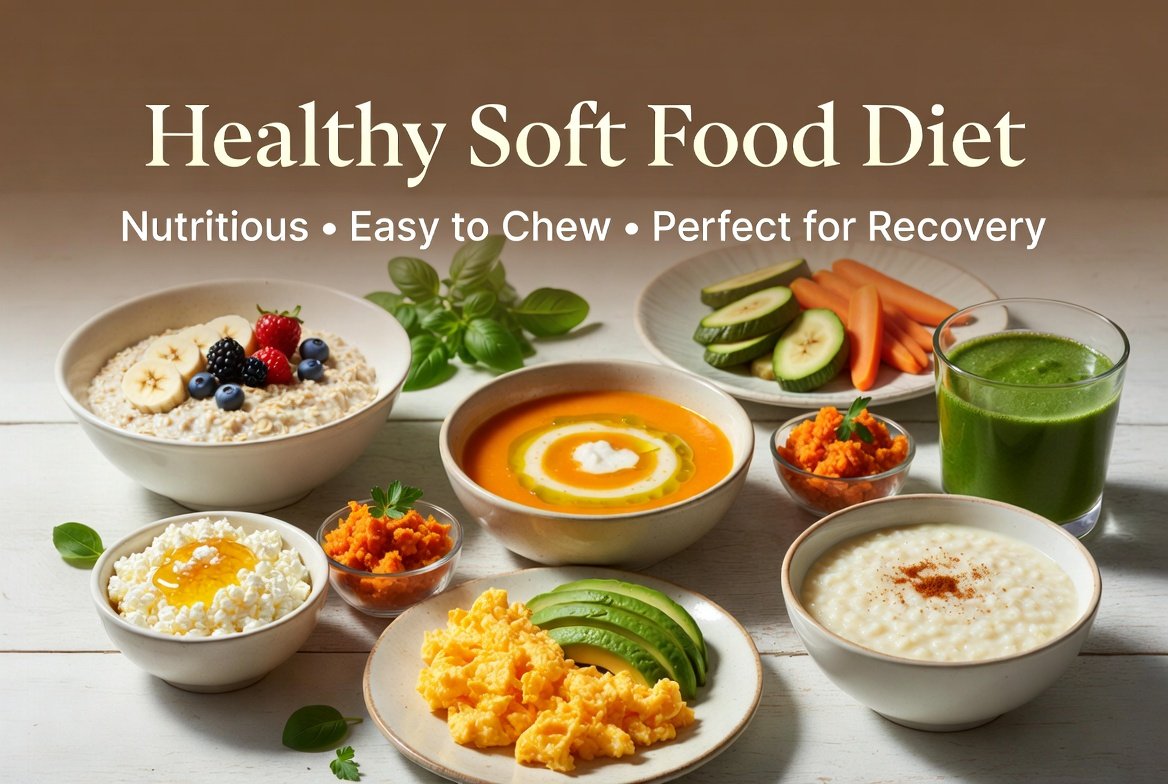
Examples include:
- Mashed or steamed vegetables like potatoes, carrots, and pumpkin
- Soft fruits like bananas, ripe pears, and applesauce
- Dairy products like yogurt, cottage cheese, and milk puddings
- Soft grains like oatmeal, rice, or soft pasta
- Tender, shredded, or minced meats, fish, and eggs
The main idea is to eat foods that don’t require much chewing but still give you the energy, protein, and vitamins your body needs.
Why Choose a Soft Food Diet?
Here are the main benefits:
- Easier to Digest – Soft foods are gentle on your stomach and intestines. Great for people with digestive problems.
- Supports Recovery – After surgery, dental procedures, or illness, soft foods help your body heal faster.
- Nutrient-Rich – You can get all essential vitamins, minerals, and proteins without tough, hard foods.
- Protects Teeth and Gums – Soft foods reduce strain on your mouth, perfect for older adults or anyone with dental issues.
- Weight and Energy Management – Soft, wholesome foods can help you feel full without overeating.
Essential Components of a Soft Food Diet
To stay healthy, make sure your soft food meals include:
- Proteins – Eggs, soft tofu, yogurt, mashed beans, soft fish, and shredded chicken
- Carbohydrates – Mashed potatoes, oatmeal, rice porridge, soft pasta
- Healthy Fats – Avocado, olive oil, soft nut butters
- Fruits and Vegetables – Steamed, mashed, or cooked soft fruits and vegetables for vitamins and fiber
- Hydration – Soups, smoothies, and water-rich fruits to keep you hydrated
Tips for Making Soft Foods Tasty
- Try different textures – Mix mashed, pureed, or soft chopped foods for variety
- Add flavor naturally – Use herbs like basil, coriander, or mild spices to make meals exciting
- Include snacks – Soft snacks like yogurt, pudding, or soft fruit help you stay energized
- Balance your meals – Include protein, carbs, and healthy fats in each meal for proper nutrition
Who Can Benefit?
A healthy soft food diet is not just for recovery—it can help anyone, especially:
- Older adults with weaker teeth
- People with digestive problems like gastritis or IBS
- Individuals recovering from surgery or illness
- Anyone who wants a gentle, nutritious diet
Final Thoughts
Eating soft foods doesn’t mean sacrificing nutrition. A healthy soft food diet can be delicious, filling, and packed with vitamins, protein, and energy. It’s a gentle way to take care of your body while ensuring you get all the nutrients you need.
